 GLP-2 TZ (10mg)
  LL37 (5mg)
  Advanced Dermal Renewal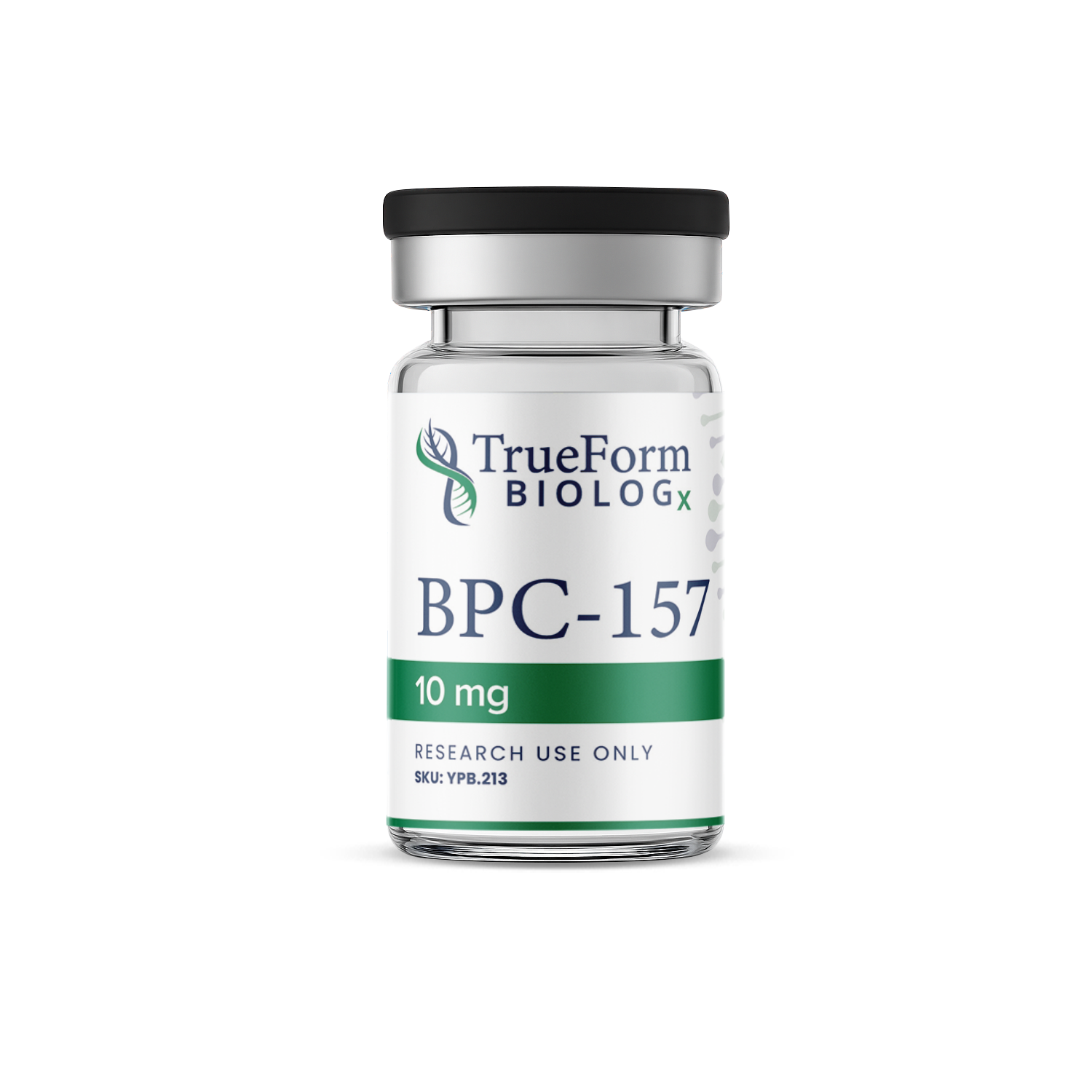
BPC-157 (5mg) | Research-Grade Pentadecapeptide | ≥99% Purity | Third-Party Tested
$69.00
BPC-157 (Body Protection Compound-157) is a synthetic 15-amino-acid pentadecapeptide derived from a protective protein found in human gastric juice. Extensively studied in preclinical models for its role in angiogenesis, tissue regeneration, inflammatory modulation, and gastrointestinal mucosal protection. TrueForm BIOLOGx BPC-157 is synthesized to ≥99% purity and validated by independent third-party certificate of analysis.
Description
BPC-157 (Body Protection Compound-157) is a synthetic 15-amino-acid pentadecapeptide derived from a protective protein found in human gastric juice. Extensively studied in preclinical models for its role in angiogenesis, tissue regeneration, inflammatory modulation, and gastrointestinal mucosal protection. TrueForm BIOLOGx BPC-157 is synthesized to ≥99% purity and validated by independent third-party certificate of analysis.
Product Specifications Table
| Specification | Detail |
| Compound Name | BPC-157 (Body Protection Compound-157) |
| Sequence | Gly-Glu-Pro-Pro-Pro-Gly-Lys-Pro-Ala-Asp-Asp-Ala-Gly-Leu-Val |
| Molecular Formula | C₆₂H₉₈N₁₆O₂₂ |
| Molecular Weight | 1,419.54 g/mol |
| Purity | ≥99% (HPLC verified) |
| Form | Lyophilized powder |
| Storage | −20°C long-term; 4°C short-term (up to 4 weeks) |
| Appearance | White to off-white lyophilized powder |
| CAS Number | 137525-51-0 |
| Testing | Third-party CoA available on request |
| Intended Use | In vitro research and laboratory use only |
Full Product Description
BPC-157 is among the most extensively studied synthetic peptides in modern preclinical research, with a published literature base spanning over 500 peer-reviewed studies since its initial isolation in the 1990s by researchers at the University of Zagreb. The peptide’s amino acid sequence — Gly-Glu-Pro-Pro-Pro-Gly-Lys-Pro-Ala-Asp-Asp-Ala-Gly-Leu-Val — has no known homology to any other identified peptide, making it a structurally unique object of scientific interest.
Research into BPC-157 has focused primarily on its apparent pleiotropic activity across multiple organ systems and tissue types. In preclinical models, investigators have documented its involvement in modulating several overlapping signaling pathways, including VEGF/VEGFR2-mediated angiogenesis, FAK-paxillin-driven cell migration, ERK1/2 activation, growth hormone receptor upregulation (via JAK-2/STAT5), EGR-1 transcription factor induction, and nitric oxide (NO) system regulation. These interconnected pathways collectively support cellular proliferation, vascular formation, and inflammatory balance — all central processes in tissue repair research.
Research Application Areas
- Musculoskeletal Research: Studied in preclinical models of tendon rupture, ligament tear, muscle injury, and bone fracture. A 2025 systematic review (Vasireddi et al.) identified 36 qualifying studies from 1993–2024 documenting improved functional, structural, and biomechanical outcomes in animal injury models.
- Gastrointestinal Research: BPC-157’s gastric origin makes it a natural candidate for GI research. Preclinical models have examined its role in mucosal protection, ulceration, inflammatory bowel disease models, and intestinal anastomosis healing.
- Angiogenesis Research: Multiple studies document BPC-157’s activation of the VEGFR2 pathway in endothelial cell models, stimulating tube formation, cell migration, and proliferation — making it a useful tool in vascular biology investigation.
- Neuroprotection Research: Emerging preclinical work has examined BPC-157’s interactions with dopaminergic and serotonergic systems, as well as its studied effects in models of traumatic brain injury and spinal cord injury.
- Inflammatory Modulation: BPC-157 has been shown in multiple models to reduce pro-inflammatory cytokines while promoting a resolution-phase healing environment.
For qualified research professionals and institutional laboratories. Not for human use.
Documentation & Quality Assurance
Each lot is sourced through our verified global supply chain with emphasis on traceability and quality control. Every batch of TrueForm BIOLOGx BPC-157 undergoes synthesis via solid-phase peptide synthesis (SPPS) and is validated by independent third-party HPLC and mass spectrometry analysis. Certificate of Analysis documents are available on request and confirm sequence accuracy, purity ≥99%, and absence of residual solvents.
Research Compliance Notice
| ⚠️ Research Use Only: BPC-157 from TrueForm BIOLOGx is manufactured and sold exclusively for in vitro laboratory and scientific research use only. This compound is not approved by the FDA for human or veterinary use. It is not a drug, dietary supplement, or food product. Purchasers assume full responsibility for legal compliance within their jurisdiction. |
Quality & Manufacturing
All materials are sourced from carefully vetted domestic and international manufacturing partners who follow quality systems consistent with ISO and cGMP principles. Each supplier is reviewed for reliability, documentation integrity, and transparency in testing.
We require a verified purity of 99% or higher and perform independent third-party spot testing to confirm that select lots meet our internal standards for identity, purity, and composition. Where available, endotoxin testing results are included on Certificates of Analysis to verify laboratory purity; their inclusion is for research quality assessment only and does not imply suitability for human or veterinary use.
All research materials are sealed for integrity and packaged for stability during storage and transport from manufacturing through final delivery.
Additional information
| Weight | 0.2 lbs |
|---|---|
| Molecular Weight | 1,419.54 g/mol |
| CAS Number | 137525-51-0 |
| Molecular Formula | C₆₂H₉₈N₁₆O₂₂ |
| Form | Lyophilized Powder |
| Storage | −20°C long-term / 4°C short-term |
| Sequence | Gly-Glu-Pro-Pro-Pro-Gly-Lys-Pro-Ala-Asp-Asp-Ala-Gly-Leu-Val |
| Intended Use | In Vitro Research Only |
Storage Instructions
All our research peptides are manufactured using a lyophilization (freeze-drying) process. This method is designed to maintain product integrity and allows vials to remain stable during shipping for approximately 3–4 months.
Once a vial is reconstituted with bacteriostatic water, it should be stored in the refrigerator to help maintain stability. Under these conditions, reconstituted material is generally considered stable for up to 30 days.
Lyophilization is a dehydration technique in which compounds are frozen and then exposed to low pressure. This causes the water in the vial to sublimate directly from solid to gas, leaving behind a stable, crystalline white structure. This powder can be kept at room temperature until reconstitution.
Upon receipt, products should be stored away from heat and light. For short-term use, refrigeration at approximately 4°C (39°F) is suitable. For long-term storage (several months to years), vials may be placed in a freezer at approximately -80°C (-112°F). Freezing is the preferred method for preserving product stability over extended periods.
⚠️ Important Notice: These products are intended for research use only. Not for human consumption.
Certificate of Analysis
Every batch undergoes rigorous third-party laboratory testing to verify identity, purity (≥98%), and quality before release.
View Certificate of Analysis